
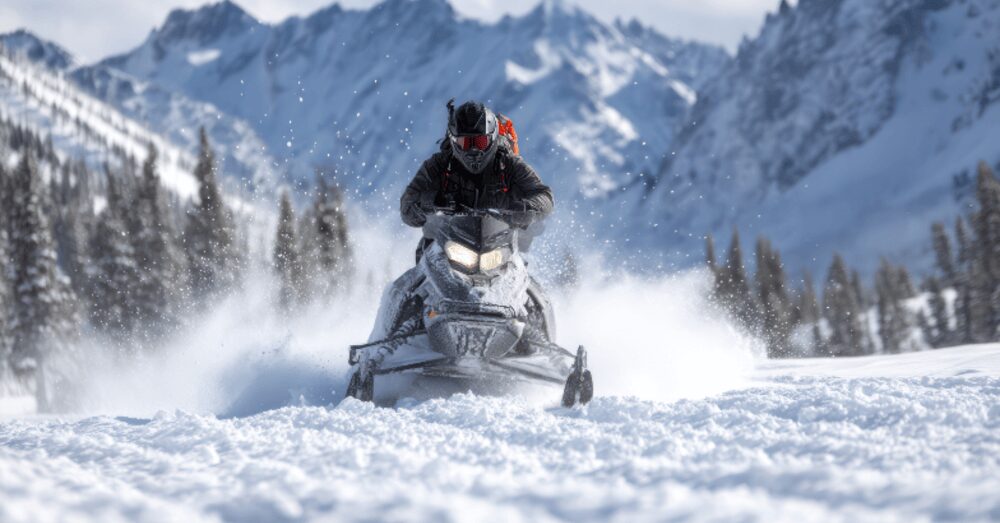
Winter weather can change in an instant, and knowing how to read the snow beneath your machine could save your life. Whether you’re carving through backcountry powder or cruising groomed trails, understanding snow conditions helps you ride smarter, avoid damage to your sled, and get home safely. Let’s break down what every snowmobiler needs to know about reading the white stuff.
- A minimum of 4 to 6 inches of packed snow is needed for safe snowmobiling, though more depth is required for soft, powdery conditions.
- No matter where you’re snowmobiling, always check the weather since winter can be unpredictable and you must always be prepared for rapidly changing conditions.
- Most avalanche activity starts on slopes between 30 and 45 degrees, making terrain awareness just as important as snow quality.
Understanding Different Snow Types
Not all snow rides the same. Snowmobiles perform best on dry powder, but that doesn’t mean you need to wait around for the ideal conditions to appear. Knowing what you’re dealing with helps you adjust your riding style accordingly.
Fresh, powdery snow can be ideal for riding, but it can linger in the air as “snow dust” after snowmobiles travel over it. This snow dust can reduce visibility for riders and make it difficult to see other snowmobiles, trail signs, motor vehicles, and hazards.
Wet snow can make your ride less pleasant and reduce your visibility. Ride with caution and slow down to ensure you can see clearly and have time to properly steer your machine. Wet snow can also increase the risk of hypothermia if you’re not dressed properly in waterproof gear.
Ice can form on hard-packed trails and roads, making snowmobile operation difficult. When you suspect ice may be present, slow your speed way down and operate with extreme caution. Take corners very slowly and allow extra distance to safely stop.
How Snow Depth Affects Your Ride
Knowing how to read snow conditions for safer snowmobile riding starts with checking depth. You require around 6 inches of snow to snowmobile. There are some lighter snow sleds you can use on less than 6 inches, but the larger designs normally need 6 inches at a minimum.
The depth of snow your snowmobile can handle will depend on the model and what kind of tracks you have. The deeper the snow, the longer the tracks should be because longer tracks are better able to stay afloat in deep snow conditions.
In deep snow, you’ll need more distance to speed up when you go uphill, and acceleration might even be needed on downhills. On hard snow, the ride will be rougher, so you’ll want to stay on flat areas and slow down.
Minimize damage to your machine by trying to avoid bare areas of ground. Avoiding bare ground also helps prevent mixing more dirt into the trail’s snow base, which causes the trail to thaw quicker.
Recognizing Avalanche Terrain
In recent years, snowmobilers have accounted for the greatest number of avalanche fatalities. This makes understanding terrain and snowpack conditions incredibly important when riding in mountainous areas.
Any sloping terrain steeper than 25 degrees with lots of heavy snow is an avalanche risk, and avalanches are most common on slopes between 35 and 50 degrees. Avoid deadly “terrain traps” such as gullies, steep-sided creek bottoms, or slopes that end in depressions because they pose a high probability for deep burial. Do not ride on slopes with cliffs below. Favor slopes that are fan-shaped at the bottom.
Temperature inversions, rain, and sun exposure can rapidly change conditions and trigger avalanches since snow loses strength as it warms. When the avalanche danger is higher, there are signs telling you the snow is unstable. Avoid areas where you see recent avalanches, cracking in the snow, or hear the snow collapsing.
Remember, one at a time on steep slopes, and park in safe spots while watching the person who is exposed to the avalanche hazard while on the slope. Each rider in the group should wear a transmitting avalanche beacon and also carry a probe and shovel in a pack they wear.
Trail Conditions and Weather Awareness
Speed is a contributing factor in nearly all fatal snowmobiling accidents. Drive at a speed that will give you enough time to react should you need to change speed or direction quickly. Conditions will dictate what a reasonable speed is, and weather, visibility, trail conditions, snow coverage, and night or day must all be taken into consideration.
It is safest to avoid riding on lakes and rivers. If you must ride on ice, wear a life jacket over your outer clothing. Stay on the marked trail and stay off of ice that has moving water near or under it since ice in these areas may be thin and weak.
Be alert for fences, tree stumps, and stretched wire that may be concealed by snow. These hidden hazards become especially dangerous when snow coverage is thin or when riding in unfamiliar territory.
Staying Safe on Every Ride
Reading snow conditions takes practice and attention to detail. Don’t snowmobile alone. Not only is snowmobiling more fun with family and friends, it’s safer too! “Snow plans” describing your machine and your planned route can be time-savers and life-savers.
Carry a first-aid kit that includes a flashlight, knife, compass, map, and waterproof matches. Always wear a helmet with goggles or a face shield to prevent injuries from twigs and flying debris.
Trust your instincts out there. If conditions look sketchy or the snow feels unstable, there’s no shame in turning around. The trails will be waiting for another day when the conditions are right for a great ride.