
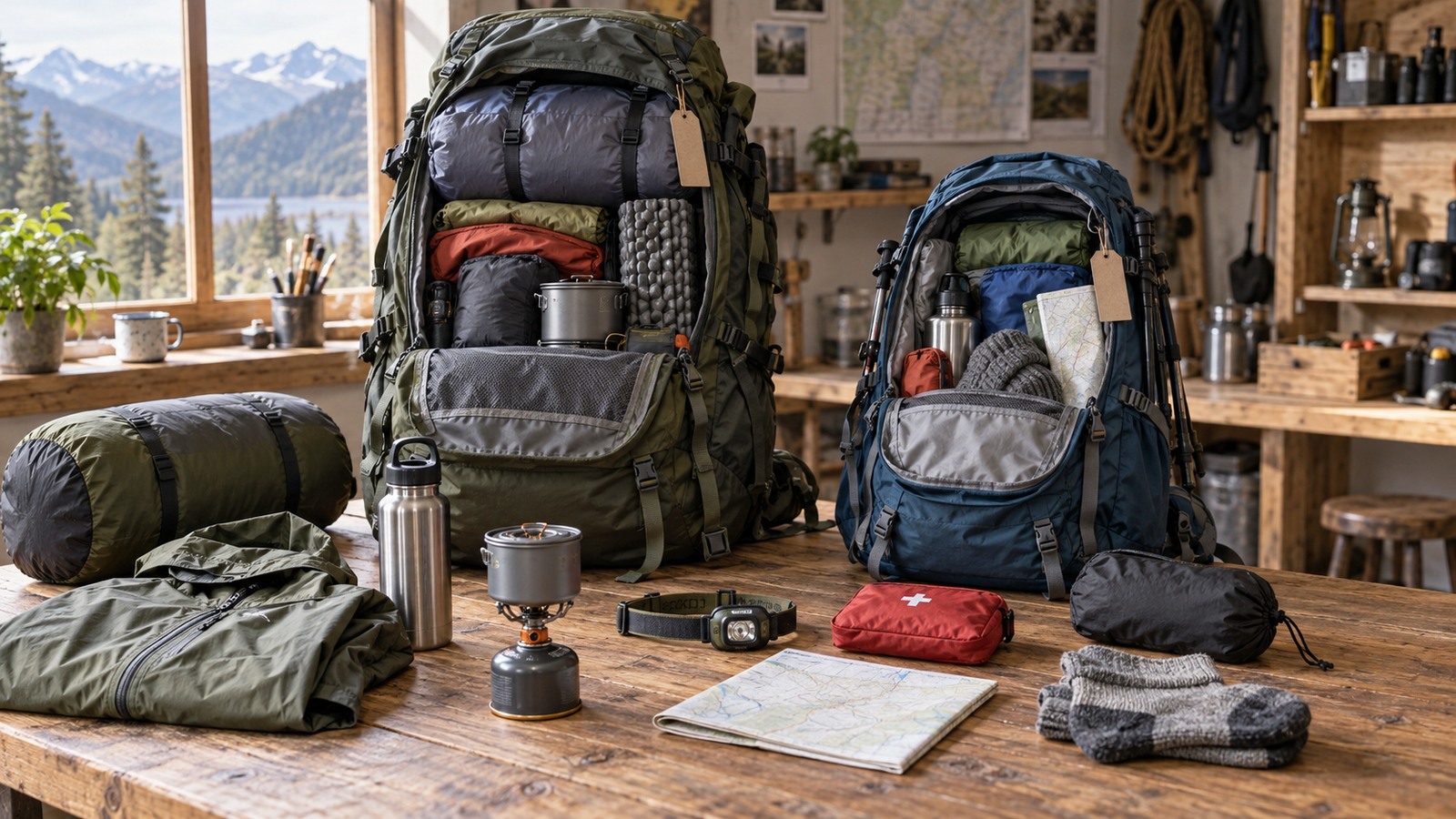
The 40, 50, or 60 stamped into your pack’s name is a real measurement, but it hides a detail most shoppers miss. That total volume gets spread across the whole bag, not just the big compartment you stuff your sleeping bag into.
- A pack’s listed liters count every pocket, lid, and hip belt, not just the main bag
- One 60 liter pack held only 45 liters in its main compartment during lab testing
- Ultralight and fully featured packs suit different hiking styles, so the right pick depends on how you move
The Number Is Honest, but It’s the Total
Ask most backpackers what the 60 in a 60 liter pack means and they’ll tell you it’s the number of liters the bag holds. That’s correct. Where things get fuzzy is the assumption that the big central compartment holds all 60 of those liters. It usually doesn’t.
When 18 traditional and ultralight packs from a recent summer gear guide went through the Outside Lab in Denver, testers compared each bag’s claimed capacity against its measured one and looked at how that volume split between the main bag and the extras. The listed capacities held up. What surprised people was the distribution. On one 60 liter pack, the main compartment measured just 45 liters. The bag still held its full 60, but the rest lived in the lid pockets, a stuff pocket on the front, side pockets, and even a bit tucked into the hip belt.
Where the Rest of Your Liters Hide
Fully featured packs earn their keep through organization. All those extra pockets, lids, and stash spots add up to real volume, and manufacturers count every bit of it toward the total. So the number on the tag is accurate. It just describes the whole system rather than the single cavity you picture when you read it.
That matters most when you’re planning a trip and mentally loading gear before you buy. A bulky item like a bear canister or a two person tent needs to fit in the main bag, and knowing you have 45 usable liters there instead of 60 changes the math. The smart move is to know roughly how big your gear is, add a little cushion to what you expect to carry, then picture where each piece actually lands.
Ultralight Packs Make the Math Simple
An ultralight pack usually gives you one main pocket and not much else. That simplicity is the point. Since almost all the volume sits in a single space, you can eyeball how much fits without much guessing. Pack it in the morning, cinch it shut, and stay on the trail all day without digging around.
A fully featured pack asks a little more thought. You have to consider what you’re bringing, where each item stuffs, and whether that setup works for the way you hike. The payoff is quick access. If you’re the type who stops often, pulls out a camera, grabs a snack, or swaps layers, having less volume in the main bag and more in organized pockets is a feature, not a compromise. You get in and out without unpacking and repacking every time.
Match the Pack to How You Move
Neither style is better on its own. It comes down to preference and hiking rhythm. Someone doing long, heads down mileage benefits from the slim single pocket. Someone who treats the trail as a series of stops and detours will appreciate the pockets that keep frequently used gear within reach.
This is worth remembering wherever you shop, whether you’re browsing an outfitter in Indianapolis before a weekend trip or comparing models online at midnight. Two packs with identical liter ratings can feel completely different once they’re loaded, because the numbers don’t tell you how the space is shaped or where it sits on your back.
Read the Tag, Then Look Closer
The takeaway is simple enough to carry into any gear shop. A capacity number is a promise about total volume, and reputable brands keep it. But the label won’t tell you how that volume is carved up, and that split decides whether your actual kit fits the way you need it to. Before you commit, open the main compartment, check how far it expands, and think honestly about the gear you haul most. A pack that reads perfect on paper only earns its price once your stuff is inside it.