
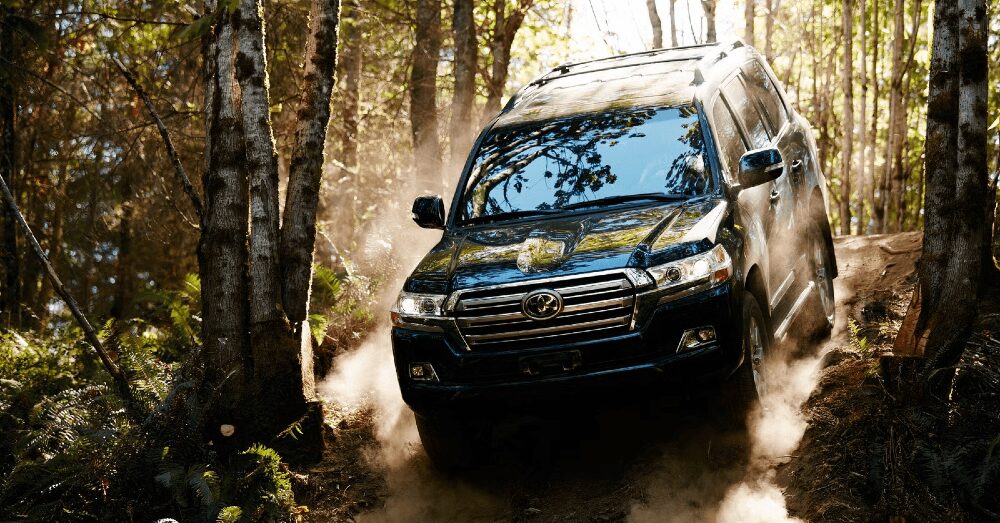
Ask a room full of overland campers what they’d drive to the edge of the map, and one name keeps coming up. The Toyota Land Cruiser has earned a following that borders on devotion, and it did so the hard way, by simply refusing to quit.
- The 70 Series has been in production since the mid-1980s and is still sold new in Australia today.
- Land Cruisers have finished the Dakar Rally on ratchet-strap suspension and started up after sitting neglected for years.
- The 80 Series and the newer 250 keep the same go-anywhere reputation alive for a fresh generation.
A Reputation Built on Not Breaking
Toyota’s unkillable reputation didn’t come from marketing. It came from trucks doing absurd things and living to tell about it. One diesel Land Cruiser famously limped across the Dakar finish line with a ratchet strap holding its suspension together. That kind of story sticks with people, and it’s the reason the badge carries so much weight among folks who wander far from paved roads.
The durability isn’t a myth passed around campfires either. A moss-covered 1990 70 Series that had been parked for an unknown stretch of years recently coughed back to life after a bit of cleaning and some fresh fuel poured into the carburetor. The cooling system was intact, there was no water in the oil, and the engine turned over on the first try. Corrosion in the distributor and a small carburetor fire slowed things down, but the old inline-six eventually cleared its throat and ran. That’s a machine that sat long enough to grow a garden, and it still wanted to work.
Why the 70 Series Became an Overlanding Icon
The appeal comes down to simplicity. That 1990 model uses a gasoline inline-six and a design that traces back roughly 40 years. There isn’t much on it to fail, and what does fail is usually easy to reach and fix in the field. Toyota has kept the 70 Series in production in Australia since the mid-1980s, and it’s still on sale there now. Very few vehicles stay relevant for four decades, but a truck that’s genuinely hard to break tends to hang around.
For overlanders, that matters more than horsepower or a fancy touchscreen. When you’re days from the nearest parts store, you want a rig you can trust and repair yourself. The Land Cruiser fits that job description almost perfectly, which is why used examples hold their value and why enthusiasts import older models from Japan just to get their hands on one.
From Rally Legends to the Modern Trail
The reliability streak carries across generations. The 80 Series from the 1990s is widely considered one of the most notable 4x4s of its era, prized today by collectors and trail runners alike. Newer versions keep the spirit going too. The current Land Cruiser has crawled over rocks, ruts, and slick terrain on ordinary all-season street tires without drama, which says plenty about the engineering underneath. And the smaller, lighter 250 model proves Toyota can modernize the formula without losing the purposeful, go-anywhere attitude that made the nameplate famous.
You’ll spot this loyalty everywhere the outdoors community gathers. At overland meetups from the Rockies to weekend trail networks outside Columbus, Land Cruisers show up caked in mud and wearing roof tents, often with six-figure odometer readings and owners who wouldn’t trade them for anything. The community treats these trucks less like appliances and more like trusted partners.
What Makes These Rigs Worth the Hype
Part of it is proven mileage. Toyota trucks have racked up a million miles, survived wildfires, and shrugged off years of neglect. Part of it is the design philosophy, which favors rugged simplicity over gadgets that can strand you. And part of it is culture, the shared knowledge among overlanders about how to keep these things running long after most vehicles would be scrapped.
If you’re weighing a platform for long trips off the grid, the Land Cruiser’s track record speaks for itself. It’s not the flashiest choice, and it was never meant to be. It’s the one that gets you home. For anyone planning real adventures where breakdowns aren’t an option, that peace of mind is the whole point, and it explains why the faithful keep buying them.